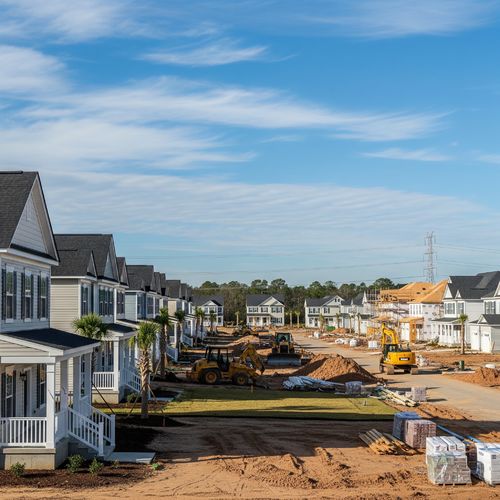

Townhouse vs Single Family Home in Charleston SC
Should you buy a townhouse or single-family home in Charleston, SC?
Choose by how you want to live, not by sticker price. In the Charleston Tri-County, the typical single family home costs about 17 percent more per square foot than a townhome, but it is also about 575 square feet larger, and that extra space explains roughly 117 thousand dollars of the 180 thousand dollar median price gap. The rest comes down to who maintains the exterior, what your regime fee and HOA fee cover, which insurance policy you need, and whether the yard fits your weekends.
By Brett Kelley | October 26, 2026
Most buyers try to answer this one with a price tag. That's the wrong way in. A townhome and a single family home at two different prices aren't two versions of the same purchase. They come with different square footage, different upkeep, different fees, and different insurance.
I walked through all of it in a video using real closed sales from Charleston, Berkeley, and Dorchester Counties. This post puts the decision in writing so you can compare at your own pace. Every number below is a median from MLS closed sales over about six months, pulled October 20, 2026, with a sample of roughly 200 sales of each type.
What you own, what you share, and who pays
With a single family home, it's simple. You own the house and the lot it sits on. Nobody shares your walls, and nobody shares your roof.
With a townhome, you share at least one wall with a neighbor, and often a roofline too. What you own depends on how the community is set up. In some, you own your unit and the lot under it. In others, you own the inside of your unit, and the association owns or insures the building. That one difference decides who pays when something big breaks, and what an association is allowed to tell you to do. So before you fall in love with a townhome, ask: what do I own, and what does the association own?
Everybody fixates on the shared wall. The wall between two townhomes is built to a fire rating by code, but how it sounds is a different question, and you can't answer it from a listing photo. Stand there. Be quiet. Listen. The wall is a feeling. Ownership is a fact. Compare the facts first.
Two fees that are not the same thing
An HOA fee is for the neighborhood as a whole, things like common areas. In some communities it applies to every home, townhome and single family alike. A regime fee is different. It's an extra fee townhome owners pay because they share a building. It can be monthly or quarterly, and the amount swings a lot from one community to the next.
What does a regime fee cover? It depends, so ask. In many communities it covers exterior maintenance, roof repairs and replacement, landscaping, and insurance on the building. Two townhome communities can have very different fees because they cover very different things.
Don't ask, "Is there an HOA?" Ask four things:
- What does the fee cover?
- What does it cost?
- How much is in reserves?
- How often has it been raised?
Then ask to see the documents and read them before you're committed. Your closing attorney can review them with you. Fees can go up, and when shared money runs short, an association can raise the fee or charge a special assessment. Those answers are worth more than the listing.
Two insurance policies that are not the same thing
If the association's policy covers the building, you may only need an HO6 policy, which covers the inside of your unit and your belongings. A standard homeowner's policy on a single family home covers the whole structure. But not every townhome community works this way. In some, you own the building and the lot, and a standard policy is the right one. Ask an insurance agent which policy you need before you go under contract. I'm not an insurance agent, so get that answer from them. Our Charleston homeowners insurance guide for buyers covers the other questions to bring to that call.
Neither setup is better. If you want the roof, the siding, and the lawn to be somebody else's job, that's worth paying for, and it shows up as a fee. If you want control over how the outside looks and who you hire, a single family home gives you that, and the bills come to you.
The backyard test
Picture a normal Saturday. Do you grill? Do you have a dog, or want one? Do you garden? Do you want a pool, or a community pool you can walk to? Now judge the yard that weekend needs.
- Fence: Single family lots usually give you more say, but an HOA can still set the height, material, or color. Townhome yards are usually smaller, and the association often controls what goes up.
- Dog: Look at the size of the yard, whether it's fenced, and whether the association limits the number or size of pets. Some do.
- Grill: Some associations and fire rules limit where a grill can sit, especially close to the building or on a balcony. Ask where yours is allowed.
- Pool: A private pool needs a lot with room, so that's usually a single family conversation, with its own rules. A townhome community may have a shared pool instead, and that shows up in the fees.
A yard that fits how you actually spend a weekend is worth more than extra square footage inside that you won't use.
What the Tri-County numbers say
I compared real closed sales across Charleston, Berkeley, and Dorchester Counties, and I did it by price per square foot, because a townhome and a single family home are rarely the same size.
- Townhomes: a median of about 204 dollars per square foot, about 1,600 square feet, closing around 320 thousand dollars.
- Single family homes: a median of about 238 dollars per square foot, about 2,200 square feet, closing around 500 thousand dollars.
So the single family home costs about 17 percent more per square foot, but it's also about 575 square feet bigger. Price that extra space at the townhome rate and it covers roughly 117 thousand dollars of the 180 thousand dollar gap. The remaining 63 thousand dollars or so is what buyers pay for a detached home on its own lot. Don't give the whole gap to the shared wall. A big part of it is just size.
I left monthly payments out on purpose. They change with rates, your down payment, and your lender, and you should get real numbers for your own situation instead of borrowing mine.
Speed and age
Townhomes took a median of 31 days to sell. Single family homes took 26. Both closed at about 100 percent of their final list price, and about 99 and 98 percent of their original list price. About six in ten of each type closed below original list, so treat the original price as a starting point on either one. Across the Tri-County, they sell at a similar pace.
If you're shopping new, about 43 percent of the townhomes that sold were built in 2025 or later, compared with about 26 percent of single family homes. Of all those newer homes, though, about 81 percent were single family and 19 percent were townhomes. Our guide to buying new construction in Charleston walks through what to ask a builder. And if you want real homes to compare as you read, here's a live list of townhomes and single family homes for sale around the Tri-County.
Three questions that settle it
- What do I want my weekends to look like? If you want less to take care of, lean townhome. If you want control and a project or two, lean single family.
- What does my yard need to do? Grill, dog, fence, garden, pool. Judge the lot, not just the square feet inside.
- Am I paying for space, or for freedom from upkeep? Price per square foot tells you what you pay for space. The HOA fee and the regime fee tell you what you pay for freedom from upkeep.
If your answers point in both directions, that's normal. Go back to the backyard test and start there.
Here's the mistake I see buyers make most: comparing two sticker prices and calling it a decision. Compare price per square foot. Compare what the HOA fee and the regime fee actually cover. Ask an insurance agent which policy you'd need. Read the HOA documents before you're committed. I'm not going to tell you which one to buy. I'd rather you pick the one you'll still like in five years, when the roof, the yard, and the monthly fee have all become part of your routine.
Frequently Asked Questions
Is it cheaper to buy a townhouse or a single family home in Charleston SC?
Based on MLS closed sales across Charleston, Berkeley, and Dorchester Counties (pulled October 20, 2026), the typical townhome closed around 320 thousand dollars and the typical single family home around 500 thousand dollars. Per square foot, the gap is smaller: about 204 dollars for townhomes and 238 dollars for single family homes, a difference of about 17 percent.
What is a regime fee in South Carolina?
A regime fee is an extra fee townhome owners pay because they share a building, separate from any neighborhood HOA fee. It can be monthly or quarterly, and what it covers varies by community. Many regime fees cover exterior maintenance, roof work, landscaping, and insurance on the building, so ask for the documents before you buy.
Do I need HO6 insurance for a townhome?
It depends on how your community is set up. If the association's policy covers the building, you may only need an HO6 policy for the inside of your unit and your belongings. If you own the building and the lot, a standard homeowner's policy is the right one. Ask an insurance agent before you go under contract.
Do townhomes sell slower than single family homes in the Charleston Tri-County?
Slightly, but not by much. In the six months of closed sales I reviewed, townhomes took a median of 31 days to sell and single family homes took 26. Both closed at about 100 percent of their final list price.
Are new townhomes more common than new single family homes?
Townhomes are more likely to be new, but there are far more new single family homes overall. About 43 percent of townhomes that sold were built in 2025 or later, compared with 26 percent of single family homes. Of all those newer homes, about 81 percent were single family and 19 percent were townhomes.
The decision comes down to how you want to live, not which sticker price is lower. Run the three questions, compare price per square foot, and get the HOA documents and insurance answer before you commit. If you're getting serious about buying here, get on the VIP Home Search so you see the right listings first: https://findhomessc.com/vip-home-search/. Want a second set of eyes on your own situation? Book a quick call with me: https://scheduler.zoom.us/brett-kelley-74pj7g/lets-chat.
About Brett Kelley
Brett Kelley is a licensed South Carolina REALTOR (SC License #96167) and Team Leader of The TREAT Team at SCSOLD, LLC, serving buyers and sellers across the Charleston tri-county area of Charleston, Berkeley, and Dorchester counties. A REALTOR since 2016, he has helped hundreds of families buy and sell homes and specializes in listing and seller representation. Connect with Brett at findhomessc.com.
Statistics are medians from MLS closed sales in Charleston, Berkeley, and Dorchester Counties over about six months, pulled October 20, 2026, and are provided as an example. Figures change and are not a prediction. This post is educational and is not legal, insurance, or financial advice. Equal Housing Opportunity. Brokered by SCSOLD, LLC.