

Area Highlights
A quick view of the most influential metrics in North Charleston.
North Charleston Homes for Sale
Last updated July 2026 by Brett Kelley, The TREAT Team. South Carolina License #96167.
Most people experience North Charleston through a windshield, on the way to the airport or the outlets, and decide they have already seen it. They have not. North Charleston is the third largest city in South Carolina, it spreads across three counties, and it does more of the region's actual work than any address on a postcard. The people buying here are not settling for it. They are getting in front of it.
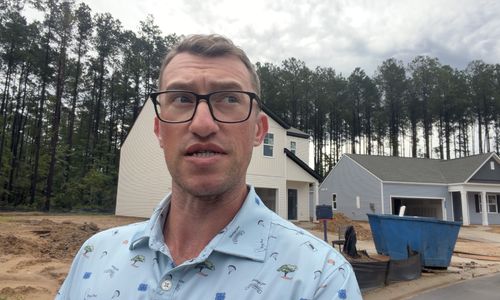
The TREAT Team works this city every week. Our team leader lives twelve minutes away in Hanahan, and we run deals from Park Circle to the Dorchester County line often enough to know which blocks move in a week and which ones sit. Here is the honest read on the place: where people actually live, what is being built, and how to think about a purchase here in 2026.
The Shape of North Charleston
North Charleston is not one neighborhood with a personality. It is a working city of roughly 130,000 people (129,245 per the U.S. Census Bureau's July 2025 estimate) stitched across Charleston, Berkeley, and a sliver of Dorchester County. That tri-county footprint is the first thing to understand, because it changes your school district, your tax bill, and sometimes your commute depending on which side of a street you buy on.
The economic base is the reason the housing market here has held up. Boeing builds the 787 Dreamliner here. Mercedes-Benz Vans, Bosch, and a deep bench of aerospace and logistics suppliers sit along the Palmetto Commerce corridor. Charleston International Airport and Joint Base Charleston share a runway on the city's west side. The Port of Charleston runs its newest container facility, the Hugh Leatherman Terminal, on the old Navy base. When people ask why North Charleston keeps drawing buyers, the answer is jobs. The paychecks are real and they are not leaving.
Where People Actually Live
The neighborhoods here do not blend together, and matching the right one to your situation matters more in North Charleston than almost anywhere in the tri-county.
Park Circle is the walkable, restaurant-dense heart of the city, built around a circular park with the largest inclusive playground of its kind. Olde North Charleston sits right beside it with older homes and a strong historic identity. Oak Terrace Preserve and Mixson are the newer-construction answers for buyers who want energy-efficient homes and sidewalks without leaving the Park Circle orbit. Horizon Village draws young families for the same reasons at a different price.
Push west and the character changes. Cedar Grove, Indigo Fields, and Wando Woods give you more yard and more house for the money, with quick access to Boeing and the airport. Coosaw Creek Country Club, on the Dorchester County side, is the gated golf option. The right answer depends entirely on whether you are optimizing for walkability, square footage, schools, or commute, and those four pull in different directions here.
The zones buyers ask about: Park Circle (with its own full guide), Olde North Charleston, Oak Terrace Preserve, Mixson, Horizon Village, Cedar Grove, Indigo Fields, Wando Woods, Coosaw Creek Country Club, Wescott Plantation, Carolina Bay, Union Heights, and the Navy Yard district.
What Is Being Built, and Why It Matters
North Charleston is the most actively redeveloping city in the region, and a few projects will reshape value over the next decade.
The biggest is the Lowcountry Rapid Transit line, a 21.3 mile bus rapid transit system running mostly down Rivers Avenue from Ladson to downtown Charleston. It is South Carolina's first system of its kind, and construction is expected to begin in 2027. The corridor it runs through is exactly where the city is steering new housing and mixed-use development, so the blocks near future stations are worth watching. You can track the route and station plans on the official LCRT site.
Near City Hall off I-26, Roper St. Francis is building a $1.2 billion hospital campus that will anchor a new employment center at Mall Drive. Mayor Reggie Burgess, who took office in 2024 as the city's first Black mayor, is pushing a Unified Development Ordinance to modernize zoning rules that have barely changed since 1972. The city's own assessment projects room for 102,000 more households and 140,000 new jobs by 2045. That is the growth pressure behind every conversation about this market.
There is a real trade-off in all of it, and we will say it plainly: the same growth lifting home values is also pushing property taxes on longtime residents in neighborhoods like Union Heights. If you are buying here, you are buying into a city actively wrestling with that tension, not a finished product.
Life in North Charleston
The cultural center of gravity is stronger than outsiders expect. Riverfront Park, built on the former Navy base along the Cooper River, hosts the High Water Festival every spring and has put the city on the regional music map. The North Charleston Coliseum and Performing Arts Center brings in arena acts and Broadway tours, and the Charleston Area Convention Center sits right beside it. The North Charleston Arts Fest runs every May.
Day to day, East Montague Avenue in Park Circle carries the best concentration of independent restaurants and breweries in the city, with Holy City Brewing and Firefly Distillery anchoring the scene. Tanger Outlets and Northwoods Mall cover the retail base. Wannamaker County Park gives families a thousand acres of trails, a water park, and a dog park. For a city people drive through, there is a surprising amount of reason to stop.
Getting Around
Location is North Charleston's quiet advantage. I-26 and I-526 both cut through it, which puts most of the tri-county inside a reasonable drive. Charleston International Airport is central rather than on the edge, so a flight out is often a ten to fifteen minute drive instead of an hour. Boeing, the port terminals, and Joint Base Charleston are short commutes for the tens of thousands who work them. Rivers Avenue, Dorchester Road, and Ashley Phosphate Road are the main surface arteries, and traffic on them is the trade-off for sitting in the middle of everything.
A Short History
North Charleston grew up around the Charleston Naval Base, which employed tens of thousands at its peak and gave the city a blue-collar, military backbone for most of the twentieth century. When the base closed in 1995, the city lost its anchor and spent a hard decade figuring out what came next. The answer turned out to be redevelopment: the Noisette plan reimagined the former base area, Park Circle was restored block by block, and the aerospace and port economy filled the gap the Navy left. The North Charleston you see today is the result of that deliberate rebuild, and it is still in progress.
Thinking About a Move in North Charleston?
North Charleston rewards buyers who understand it and frustrates the ones who treat it as one undifferentiated place. If you want a real read on a specific neighborhood, a specific street, or whether your timing lines up with the market, that is the conversation we are built for, and there is no pitch attached to it. Start with a home valuation if you are selling, or tell us what you are looking for as a buyer and we will point you to the blocks that fit.
Thinking about selling? Get a current read on what your home is worth. New to the Lowcountry? Our moving to Charleston guide covers the whole tri-county, and Hanahan sits just across the line, about ten minutes north of Park Circle. When you are choosing representation, here is how to pick the right agent.
Explore More of the Tri-County
North Charleston touches three counties, so the surrounding markets are worth a look as you compare:
The walkable heart of the city has its own full guide. Start here.
Ten minutes north of Park Circle, across the Berkeley line.
Across the Ashley: more inventory and the hospital corridor.
East of the Cooper: the premium family market.
Water-adjacent living between downtown and Folly.
The county holding most of the city.
The northern portion of the city, and the value corridor beyond it.
The Dorchester Road corridor side, with DD2 schools.
Buyer Toolkit for North Charleston
Start at the buyer hub, or go straight to the guide that fits your situation:
The widest entry-point price band in the metro starts here.
9,011 veterans live here and the base shares the runway. This is VA country.
The zero-down paths that still work inside the city.
SC Housing programs fit this market's price points better than anywhere.
Lower credit, lower down payment, and what it costs.
Every line item before you reach the closing table.
Navy Yard townhomes to Palmetto Commerce infill. Go in represented.
The ranches of Cedar Grove and Wando Woods are exactly this.
Half this city rents. Run the numbers on switching sides.
Seller Toolkit for North Charleston
Start at the seller hub, then use the tools built for your decision:
A real valuation, not a Zestimate.
The widest price band in the metro makes comps matter more, not less.
Deed stamps, attorney closing, and your real net.
A decision framework, not a headline.
Cash offers, coming-soon exposure, and the honest tradeoffs.
Move-up from a starter here without renting in between. Map it out.
Moving, Insurance, and Flood
The relocation pillar: areas, timing, and how to land here without guessing.
What life actually costs in the tri-county, category by category.
Inland pockets price differently than the river edges. Know your number early.
The Cooper and Ashley edges carry real AE zones. Know the letters before you offer.
Work With Us in North Charleston
An honest take on who actually fits your situation, including whether it is us.
The questions to ask before you sign with anyone, including us.
What past clients say it was like to buy and sell with TREAT.
Led by Brett Kelley, Hanahan resident, twelve minutes from Park Circle. SC License #96167.
North Charleston rewards buyers who understand it and frustrates the ones who treat it as one place. If you want the block-level read, the conversation is free and there is no pitch attached to it.
Get My Free Market Report
📞 843.738.2394 | 📧 [email protected]
The TREAT Team at SCSOLD LLC. Licensed in South Carolina, #96167. Serving Charleston, Berkeley, and Dorchester Counties. Data sources: U.S. Census Bureau QuickFacts, North Charleston city (Vintage 2025), American Community Survey 2024 estimates, and Lowcountry Rapid Transit. Figures reviewed July 2026 by the TREAT Team. Reviewed by Brett Kelley, SC License #96167, Hanahan resident.
Frequently Asked Questions about North Charleston
For buyers who want the shortest commute to Boeing, Joint Base Charleston, NIWC, the airport, and the future Roper Hospital campus, yes. The city has the widest price band in the tri-county, from entry-point townhomes to Park Circle premium homes and gated Dorchester Road golf communities. The CCSD School Choice program also opens magnet options that are physically located inside the city. Trade-offs include a citywide Walk Score around 26 (Park Circle itself is much more walkable than the broader city), and the reality that North Charleston is large enough that the right answer depends entirely on which zone fits your household.
The honest answer is that it depends on what you are solving for. Park Circle (including Oak Terrace Preserve and Mixson) is the most walkable and the most amenity-dense, with the highest price per square foot. The Dorchester Road corridor (Coosaw Creek Country Club, Wescott Plantation, Carolina Bay) gives you larger lots, master-planned amenities, and Dorchester District 2 schools. The Navy Yard area is the newest construction and the most aggressive long-term redevelopment play. Each works for a different buyer.
Park Circle is the historic walkable district on the east side of the city, originally platted in 1912 as the only Garden City in South Carolina. It is sometimes called Olde North Charleston because it was one of the first suburban developments in the area before the City of North Charleston incorporated in 1972. Park Circle as a district includes sub-developments like Oak Terrace Preserve, Mixson, Horizon Village, and the historic blocks around the central park and East Montague Avenue. It is one of several distinct zones inside the broader City of North Charleston. Our full Park Circle guide covers the district street by street.
Navy Yard Charleston is the private redevelopment of approximately 70 acres of the former Charleston Naval Base, which closed in 1995. The project totals 1.2 million square feet of mixed-use space across adaptive reuse of historic storehouses, the power plant, and the former Naval Hospital (still the tallest building in North Charleston). Storehouses 8 and 9 are already open with luxury apartments, restaurants, and creative office. The DRB Homes Marine Row townhomes start construction in Q2 2026. The adjacent city-led Battery Park project will add another 3.5 million square feet and 2,600+ residential units across 85 acres.
Roper St. Francis broke ground on a new $1.2 billion, 1.5 million square foot hospital campus on 27 acres behind North Charleston City Hall in June 2025. The campus is scheduled to open in 2029 and replaces the existing downtown Charleston Roper Hospital. Roper St. Francis projects a $2.5 billion economic impact and roughly 3,600 jobs. For buyers, the practical impact is twofold: a major employer relocating to North Charleston (which supports long-term housing demand in surrounding neighborhoods), and direct access to a flagship hospital for residents across the entire city.
Most of North Charleston is in the Charleston County School District. The Dorchester Road corridor on the western side of the city falls under Dorchester District 2. Portions in Berkeley County are zoned to the Berkeley County School District. The CCSD School Choice program opens magnet options including Academic Magnet High School (Niche A+) and the Charleston County School of the Arts (Niche A+), both located on W. Enterprise Street inside North Charleston. Verify the exact zoned schools for any specific address before making an offer.
Boeing broke ground on a $1 billion expansion of its North Charleston campus on November 7, 2025, adding a second 1.2 million square foot final assembly building for the 787 Dreamliner program. The project adds approximately 1,000 new jobs over five years on top of the existing 8,200-employee workforce, with 787 production scaling to ten airplanes per month in 2026. The practical effect on housing is sustained demand from aerospace workers across all four North Charleston zones, with particular pressure on the neighborhoods inside a 15-minute commute of the plant.
It depends on which part of North Charleston. From Park Circle, downtown Charleston is roughly 7 to 10 miles, or a 20 to 30 minute drive via I-26. From the Dorchester Road corridor on the western side of the city, downtown is closer to 35 to 45 minutes depending on traffic. Boeing, Joint Base Charleston, NIWC, and Charleston International Airport are all within 15 minutes of most North Charleston addresses regardless of zone.
All three, and that is not a technicality. North Charleston spreads across Charleston County (most of the city), Berkeley County (the northern portion), and a sliver of Dorchester County. The county line changes your school district, your tax millage, and your county services, sometimes from one side of a street to the other. Confirm the county for the exact address before you offer.
North Charleston's population is 129,245 as of July 2025, per the U.S. Census Bureau's latest estimates, making it the third largest city in South Carolina behind Charleston and Columbia. It is up 12.5 percent since the 2020 Census, roughly 14,400 new residents, among the largest absolute gains in the metro. The city's own planning projects room for 102,000 more households by 2045, which is why redevelopment, not scarcity, defines this market.
The median household income in North Charleston is $62,956 per the U.S. Census Bureau (2020-2024 American Community Survey, in 2024 dollars). That sits below the state median, and the honest context is that the city spans the widest range in the region, from entry-point rentals to gated golf communities, so the citywide number averages very different neighborhoods. Owner-occupancy is 49.8 percent, the only renter-majority big city in the tri-county, which is exactly why buying here converts the metro's job engine into equity. The live market report on this page carries the current demographic data.
South Carolina assesses owner-occupied primary residences at a 4 percent ratio and second homes and investment properties at 6 percent, and primary residents are exempt from school operating taxes under Act 388. North Charleston adds a wrinkle no other tri-county city has: the city spans three counties, so the same city name can carry Charleston County, Berkeley County, or Dorchester County millage depending on the address. Confirm the county and the parcel with the correct assessor before you count on a number. Our South Carolina closing costs guide walks through the rest of the math.
Free market report
Want the full market report for North Charleston?
We want to ensure that you have all the information needed to make the best decisions when it comes to your home goals. When you enter your info in the form you will get instant access to the area's latest market report, complete with sales and demographic trends.
North Charleston
Market Report
Ready to take
The next step?
Not sure if now's the right time to buy or sell? We would love to get to know more about you and your needs! Feel free to use any of the options here to get in contact with us!