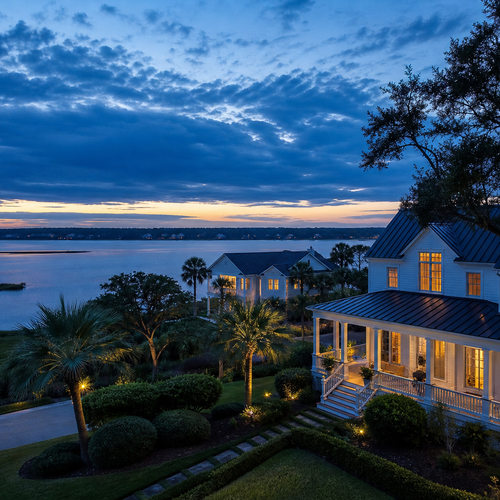

Waterfront Living on Johns Island: Pros and Cons
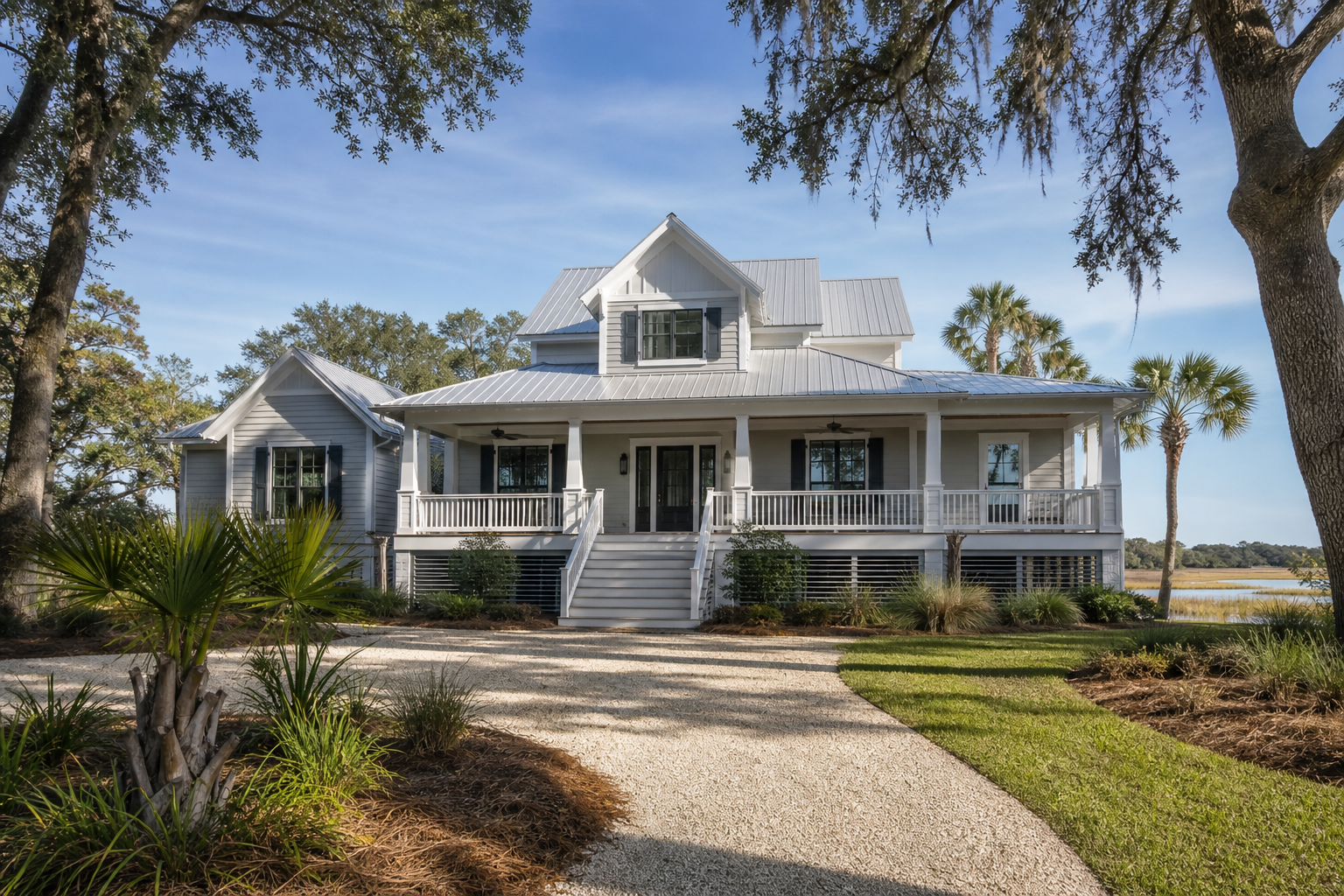
Is waterfront living on Johns Island worth it?
Johns Island waterfront living delivers genuine coastal beauty and long-term value, but it comes with real obligations around flood insurance, property disclosure, and due diligence that inland buyers never face. The most recent available data, from May 2026, shows a median sale price of $694,000 on Johns Island, with individual waterfront properties ranging from roughly $250,000 to $5,500,000 depending on water type, lot depth, and access. Whether the lifestyle premium is worth it depends entirely on your specific parcel, your financing, and how thoroughly you vet the property before going under contract.
I work with buyers on Johns Island regularly, and the questions I hear most often are not about the views. They are about flood zones, insurance quotes, and what the seller is required to disclose. Let me walk you through both sides of the equation so you can make a genuinely informed decision.
The real benefits of Johns Island waterfront property
Scarcity and long-term value
Waterfront lots on Johns Island are finite. You cannot manufacture more marshfront acreage or deepwater creek access, and that scarcity tends to hold value even when the broader market softens. According to Zillow's July 2026 Charleston market data, the overall Charleston metro home value reached $596,437, up 1.0% over the prior year. Waterfront inventory on Johns Island commands a meaningful premium above that baseline, and the Redfin May 2026 Johns Island market snapshot put the island-wide median at $694,000 per home and $287 per square foot. The premium you pay for water access is not just lifestyle. It is a position in a supply-constrained segment of the market.
For more context on how Johns Island stacks up against other Charleston submarkets, I put together a detailed comparison that is worth reading before you narrow your search: Mount Pleasant vs. West Ashley vs. James Island vs. Johns Island.
Lifestyle and access
Tidal creek frontage, marsh views, kayak launches, and deepwater dock potential are real quality-of-life assets. Johns Island sits within easy reach of Kiawah Island, Seabrook Island, and Folly Beach while still offering a quieter, less developed character than many coastal communities closer to downtown. The tradeoff is that you are farther from the urban core, and the commute math matters depending on where you work.
Market activity is real
The Realtor.com Johns Island market page showed 637 active listings and a median listed price of $799,900 as of mid-2026, with 71 days on market across the portal's tracked inventory. That is a wider selection than many coastal communities in the Charleston area, which means buyers have real options rather than competing for one or two available homes at a time.
The tradeoffs you need to understand before buying
Flood zones are parcel-specific, not neighborhood-wide
This is the single most important thing I tell every buyer who comes to me interested in Johns Island waterfront. The flood zone designation on the house next door may be completely different from the one on the property you are considering. Johns Island has both lower-risk and higher-risk coastal areas, and the difference between an AE zone and an X zone can mean thousands of dollars per year in insurance costs, plus lender requirements for mandatory flood coverage.
Before you write an offer, verify the exact parcel's FEMA flood zone on the FEMA Flood Map Service Center. An elevation certificate, if one exists for the property, gives you even more precision and can help your insurance agent quote an accurate premium. Homes near tidal creeks, marshfront lots, and water-access communities are the highest-exposure situations. The address matters far more than the neighborhood name.
Insurance costs are higher and more variable
Homeowner's insurance and flood insurance are separate policies, and waterfront buyers on Johns Island need to budget for both. The National Flood Insurance Program is one option, but private flood insurance has grown significantly in South Carolina and may price more favorably depending on your elevation and construction type. Get an actual insurance quote before you remove contingencies. A number that looks manageable in the abstract can change the entire financial picture once you see the real premium for your specific property.
The South Carolina Department of Insurance maintains resources on coastal property coverage and can help you understand your options if you are navigating this for the first time.
The South Carolina disclosure statement and what it covers
Under South Carolina Code Section 27-50-40, sellers of most residential property are required to provide a written Residential Property Condition Disclosure Statement. For a waterfront home, the relevant sections include water supply and septic, roof, foundation, and structural components, plumbing, electrical, and HVAC, wood-destroying insects, zoning and restrictive covenants, and any governmental notices affecting the property. The current form, effective June 2023, is published by the South Carolina Real Estate Commission.
That disclosure is a starting point, not a finish line. It is not a substitute for a flood disclosure, an elevation certificate, or an independent insurance quote. For a Johns Island waterfront purchase, the practical due-diligence bundle I walk my buyers through includes the disclosure form, FEMA flood-zone verification, any available elevation history, and a real insurance quote from a carrier who writes coastal South Carolina.
Deed recording and closing logistics
South Carolina charges a deed recording fee of $1.85 per $500 of realty value, with the state portion at $1.30 and the county portion at $0.55, per the South Carolina Department of Revenue. This is a fixed statutory charge. Who pays it is typically handled in the purchase agreement and closing instructions rather than set by statute, so it is a negotiable line item in your contract.
For Johns Island purchases, recording happens through the Charleston County Register of Deeds at 101 Meeting Street, Suite 200. The office closes at 5:00 p.m., but walk-in recording cuts off at 4:30 p.m. On deadline-sensitive closings, that 4:30 cutoff matters more than the posted hours.
Price dispersion is wide
The most useful thing I can tell you about Johns Island waterfront pricing is that the range is enormous. Recent market data shows transactions from roughly $250,000 to $5,500,000 on the island, and that spread is not random. It reflects the difference between a modest inland home with incidental water views, a marshfront lot with a dock permit, and a deepwater property with direct creek access. The Redfin May 2026 data and the Resideline mid-2026 snapshot both reflect a median in the $694,000 to $699,990 range island-wide, but your specific target property could sit anywhere in that $250K to $5.5M band depending on water type and lot characteristics.
Your specific number depends on the parcel, the water access, the flood zone, and the current condition of the home. That is exactly the kind of analysis I run with buyers before we ever write an offer.
What to ask for before you buy
Here is the practical checklist I use with buyers who are serious about a Johns Island waterfront property:
- FEMA flood zone designation for the exact parcel (not the neighborhood, the parcel)
- Elevation certificate if one exists, or budget to order one
- Flood and homeowner's insurance quotes from at least two carriers before removing contingencies
- SC Residential Property Condition Disclosure Statement from the seller, reviewed carefully for any water intrusion, septic, or structural disclosures
- Dock permit status if the listing references dock access or dock potential
- HOA documents if the property is in a water-access community, including any restrictions on dock construction or watercraft storage
- Title search through the Charleston County Register of Deeds to confirm clean title and any recorded easements
Every situation is different, and the only way to know what you are actually buying is to run through this list with someone who knows this market. That is what my team does on every waterfront transaction we handle.
| Area | Median Sale Price | Median Days on Market |
|---|---|---|
| Mount Pleasant | $980,000 | 16 |
| Summerville | $383,066 | 12 |
| Hanahan | $438,000 | 28 |
| Goose Creek | $314,450 | 38 |
Source: Zillow sales data, trailing approximately 90 days as of August 2026. These are area-level medians. An individual home's value varies by condition, street, build year, and timing. Johns Island-specific data from Redfin and Realtor.com is cited separately in the text above.
For a broader view of how Charleston's appreciation trends affect waterfront value over time, this post covers the long-term picture: Charleston Real Estate Appreciation: Trends and What It Means for You.
Frequently Asked Questions
Is Johns Island considered a flood zone for waterfront homes?
Parts of Johns Island are in designated FEMA flood zones and parts are not. The designation is parcel-specific, not neighborhood-wide. Homes near tidal creeks, marshfront lots, and water-access communities carry the highest exposure. Before making an offer, verify the exact property's flood zone on the FEMA Flood Map Service Center and ask whether an elevation certificate is available for the home.
Do I need flood insurance for a Johns Island waterfront house?
If your lender requires it and the property is in a Special Flood Hazard Area, flood insurance is mandatory. Even when it is not required, waterfront properties on Johns Island carry meaningful flood risk, and most buyers in those situations choose to carry coverage. Get an actual quote from a carrier who writes coastal South Carolina before you finalize your budget. The premium can vary significantly based on your elevation, construction type, and flood zone designation.
What does the SC Residential Property Condition Disclosure Statement require for coastal homes?
Under South Carolina Code Section 27-50-40, sellers must disclose known conditions covering water supply and septic, roof and structural components, plumbing, electrical and HVAC, wood-destroying insects, zoning, and any governmental notices affecting the property. The current form is published by the South Carolina Real Estate Commission. For waterfront homes, this form is a starting point. It does not replace a flood zone verification, an elevation certificate, or an independent insurance quote.
Are Johns Island waterfront properties more expensive to insure than inland homes?
Yes, in most cases. Waterfront homes require separate homeowner's and flood insurance policies, and the flood premium alone can add significantly to your annual carrying costs depending on the flood zone and the home's elevation. Private flood insurance has grown as an alternative to the National Flood Insurance Program in South Carolina and may price more competitively for some properties. Always get a real quote for your specific parcel before you close.
How fast are Johns Island homes selling in 2026?
Portal data from Realtor.com as of mid-2026 showed Johns Island homes averaging 71 days on market across tracked inventory, while the Redfin May 2026 snapshot described the market as somewhat competitive. The pace varies by price point and water type. Waterfront properties with premium features can move quickly when priced correctly, while higher-priced or niche listings may sit longer. The most current local picture requires a live market analysis rather than portal averages.
What should I ask for before buying a waterfront home on Johns Island?
The essentials are: the FEMA flood zone designation for the exact parcel, an elevation certificate if one exists, flood and homeowner's insurance quotes from real carriers, the SC Residential Property Condition Disclosure Statement, dock permit status if applicable, HOA documents for any water-access community, and a title search through the Charleston County Register of Deeds. A local agent with waterfront transaction experience can walk you through each of these before you go under contract.
Waterfront living on Johns Island is genuinely compelling, and for the right buyer with the right property, it can be one of the best decisions you make. The key is going in with your eyes open on flood exposure, insurance costs, and the due-diligence steps that protect you. If you are considering a waterfront purchase on Johns Island, I am happy to run through the specifics with you. Schedule a consultation here and let's look at the actual numbers for the property you have in mind.
About Brett Kelley
Brett Kelley is the owner and team leader of The TREAT Team (Trusted Real Estate Advisors Team) in Charleston, SC. Leading a team of experienced advisors, Brett has personally closed more than 300 homes and helps buyers, sellers, and investors across the Charleston, Berkeley, and Dorchester County tri-county area with an honest, client-first approach.
SCSOLD, LLC · 843.738.2394
Equal Housing Opportunity. Brett Kelley, The TREAT Team, SCSOLD, LLC. South Carolina Real Estate Commission License #96167. This article is general information only and is not legal, tax, or financial advice. Confirm your specific costs, flood zone status, insurance requirements, and transaction details with your attorney, tax advisor, lender, or closing officer.