

Moving to Charleston, SC?
Best Places to Live, Home Prices, Flood Zones, and What Buyers Should Know
Last updated June 2026 by The TREAT Team.
Most people researching a move to Charleston spend months comparing it to Savannah, Wilmington, and Asheville, then make the actual decision in a weekend on the wrong question. The question is not whether Charleston is a good place to live. It is. The question is which part of the tri-county fits your budget, your commute, and your tolerance for flood risk, because all three of those things shift more across a 30-minute drive here than they do in almost any other market in the country.
This page is the honest read on the four things that actually decide a Charleston move: what it costs, how flood zones really work, how the major areas compare, and whether the move makes sense for your situation right now. No hype. Just the math and the local truth.
How Much Does It Cost to Buy a Home in Charleston, SC?
Here is the first thing to understand: "Charleston" is two different price questions. The regional median across the tri-county sits around $433,000 as of spring 2026, down roughly 1.6 percent year over year per the Charleston Trident Association of Realtors regional report, with about 51 days on market and 3.4 months of supply. The City of Charleston by itself is a different animal, with single-family homes carrying a median closer to $663,500 according to William Raveis local housing data from March 2026. When someone quotes you a Charleston price, the first thing to figure out is whether they mean the city or the region.
The tri-county breaks into rough price tiers. North Charleston, Goose Creek, and Summerville carry the most homes in the $300,000s. West Ashley and James Island sit in the middle. Mount Pleasant, Daniel Island, and the barrier islands run highest, with Sullivan's Island and waterfront downtown reaching into the millions. With 30-year rates hovering near 6.37 percent in mid-2026 and inventory up, this is a more negotiable market than buyers saw in 2021 or 2022. The National Association of Realtors named Charleston a top-10 housing market for 2026, and the local data is bearing that out: more listings, more pending sales, and sellers who can no longer ignore condition or pricing.
What this means for you: in Charleston, your budget picks your geography more than your geography picks your budget. Decide the number first, and the area choices get clear fast.
Charleston Flood Zones Explained: What Buyers Need to Know
This is the section most relocation pages skip or soften, and it is the one that costs people real money when they get it wrong. Charleston sits at an average elevation of about 20 feet above sea level, and the Lowcountry takes water from three directions: hurricanes, king tides, and heavy rain. Flood risk is not a reason to avoid Charleston. It is a reason to know exactly what you are buying before you write the offer.
Start with the rule almost every out-of-state buyer learns too late: your homeowner's insurance does not cover flood. Flood is a separate policy, written either through FEMA's National Flood Insurance Program or a private insurer. FEMA maps every property into a zone, and the zone drives your requirements:
- Zone X: Minimal to moderate risk. Flood insurance is optional, though still smart given the region.
- Zone AE: High risk, the 100-year floodplain. Flood insurance is mandatory if you have a federally backed mortgage.
- Zone VE: Highest risk, coastal areas with wave action. Mandatory insurance and the strictest building codes.
- Zone AO: Shallow sheet-flow flooding, common in pockets across the area.
The piece that trips people up is pricing. Since 2021, FEMA has used Risk Rating 2.0, which sets your premium on your specific property's elevation, distance to water, and construction type, not just the color of the zone on the map. Two houses on the same street can carry very different premiums. As a rough range, low-risk Zone X properties often run $400 to $800 a year, while coastal AE and VE properties commonly land between $1,500 and $4,500, and the worst-exposed properties go higher. West Ashley and James Island in particular have seen FEMA map updates shift requirements in recent years, so an old quote or a neighbor's number is not a reliable guide.
Before you make an offer, do four things: pull the property's zone at the FEMA Flood Map Service Center, ask for the elevation certificate, get an actual flood quote in writing, and ask about the property's flood history. A flood zone is not a dealbreaker. An un-budgeted flood premium is. For the full breakdown of zones, premiums, and how to read a flood quote, see our complete Charleston flood zones guide.
Mount Pleasant vs. West Ashley vs. James Island vs. Johns Island
These four are the areas most relocating buyers compare, and they sort into a clean ladder once you see the trade-offs. Here is the short version, with the full breakdown in the comparison guide linked below.
- Mount Pleasant. The premium tier, with medians commonly in the $700,000s to $850,000s and the strongest schools in the metro. You pay for it, and East Cooper traffic is the standing complaint.
- West Ashley. The value play. Typical homes run roughly $450,000 to $525,000 per recent Redfin neighborhood data, with no bridge to cross and Avondale's restaurant scene five to fifteen minutes from downtown.
- James Island. The closest coastal-feeling suburb to the peninsula, with the James Island Connector putting downtown five to ten minutes away and Folly Beach a short drive down Folly Road. Medians sit in the mid-$600,000s.
- Johns Island. The most land and Lowcountry character for the money, home to the Angel Oak and a wave of new construction. The honest trade-off is Maybank Highway traffic and a longer commute as the island fills in.
Read the full four-way comparison, with current pricing, schools, and commute reality for each.
Best Places to Live Near Charleston, SC
The four areas above are not the whole map. The best place to live near Charleston depends entirely on what you are solving for, and the tri-county has a clear answer for most buyer profiles.
If you want the most house per dollar with a short commute to Boeing, the airport, or Joint Base Charleston, look at Hanahan and the broader North Charleston corridor including Park Circle. If you want a master-planned community with new construction and newer schools, Summerville, Nexton, and Carnes Crossroads in Berkeley and Dorchester counties are where that inventory is being built. If you want a walkable, amenity-rich island town, Daniel Island delivers it at a Mount Pleasant-adjacent price. If beach access is the whole point, Folly Beach, Isle of Palms, and Sullivan's Island each carry their own price and lifestyle, with Sullivan's the most expensive address in the region.
There is no single best place near Charleston. There is a best place for a Boeing engineer with two kids, a different best place for a retired couple who want marsh views and no stairs, and a third for a remote worker who wants Avondale's bars within walking distance. Tell us which one you are and the list gets short.
Is Charleston, SC Still Worth Moving To?
The headlines make the case for you. The Charleston region is projected to reach one million residents by 2032 per the Charleston Regional Development Alliance. Boeing committed to a $1 billion expansion and 500 new jobs in North Charleston. MUSC, the Port of Charleston, Volvo, and a growing tech sector keep the job base diverse, and Mayor William Cogswell's Project 3500 is targeting thousands of new housing units to address the affordability squeeze.
The ground tells a more complicated story, and you deserve both halves. Prices are high relative to local incomes, flood insurance is a real and rising line item, and rates near 6.4 percent mean the monthly payment math is tighter than the relocation Instagram accounts suggest. For a buyer with a five-plus year horizon who picks the right area and budgets honestly for insurance, Charleston is still one of the strongest moves in the Southeast. For someone planning a two-year stay or stretching to the top of their budget in a flood-exposed property, the math deserves a hard second look. We broke down what the 2026 hot-spot lists actually mean for Charleston buyers if you want the longer read.
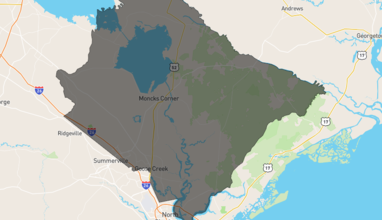
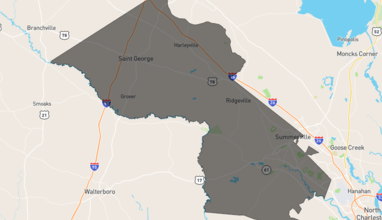
Explore Areas Across the Tri-County
View All Properties For Sale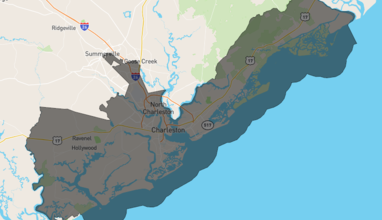
Your Charleston Relocation Map: Where to Start
The fastest way to narrow a Charleston move is to read the areas against your own number, commute, and flood tolerance. Start with the guides below, then talk to us about which one actually fits.
Compare the close-in suburbs:Mount Pleasant vs West Ashley vs James Island vs Johns Island.
Read the area guides:Mount Pleasant, West Ashley, James Island, Johns Island, Summerville, North Charleston, Hanahan, Goose Creek, and Daniel Island.
Know the flood math before you offer:Charleston flood zones explained.
When you are ready to act: see what your current home is worth, start with our buyer's guide, learn how to pick the right agent, or read the case for the best realtor in Charleston.
Frequently Asked Questions
At a regional median around $433,000 with rates near 6.4 percent in 2026, a household generally needs an income in the low $100,000s to comfortably buy at the median with a standard down payment, though that number drops in North Charleston, Goose Creek, and Summerville and rises sharply in Mount Pleasant and the islands. Budget for flood insurance as a separate line item where the property requires it.
Risk is property-specific, not area-wide, but in general higher-elevation inland neighborhoods in Summerville, parts of West Ashley outside the floodplain, and elevated lots across the region carry lower risk than low-lying peninsula, James Island, and barrier-island properties. Always pull the specific property's FEMA zone and elevation certificate before assuming.
Mount Pleasant carries the metro's strongest school reputation, with Daniel Island close behind, and both reflect that in price. Families wanting more value often choose West Ashley, James Island, or the newer Berkeley and Dorchester County communities like Nexton and Carnes Crossroads, where schools are newer and lots are larger.
North Charleston, Goose Creek, and parts of Summerville offer the most homes in the $300,000s, making them the most accessible entry points into the tri-county while keeping a reasonable commute to major employers.
West Ashley and James Island are the closest, often five to fifteen minutes to the peninsula. Mount Pleasant runs twenty to thirty minutes depending on traffic, Johns Island stretches with Maybank Highway congestion, and North Charleston and Hanahan sit closer to Boeing and the airport than to downtown.
The market has shifted toward balance, with inventory up, pending sales rising, and homes taking around 51 days to sell regionally. Buyers have more choice and more negotiating room than they did during the pandemic years, while well-priced homes in condition still move quickly.
No. Flood insurance is mandatory only for properties in FEMA Zones AE or VE with a federally backed mortgage. Even where it is optional, carrying it is a reasonable decision given Charleston's coastal exposure. Premiums are now set property by property under Risk Rating 2.0.
Ready to Figure Out Where You Actually Fit?
We have helped hundreds of families make this exact decision, from Boeing transfers to retirees coming down from the Northeast to locals moving across the bridge. We are not going to tell you Charleston is perfect or that every neighborhood is a winner. We will tell you which areas fit your number, which flood exposure you can live with, and where the trade-offs land for your situation. The first conversation is free and there is no pitch attached to it.
📞 843.738.2394
📧 [email protected]
🌐 findhomessc.com
Want a starting number for your own move? Find out what your current home is worth so you know what equity you are working with.
The TREAT Team at SCSOLD LLC serves Charleston, Berkeley, and Dorchester Counties.