

Area Highlights
A quick view of the most influential metrics in Downtown Charleston.
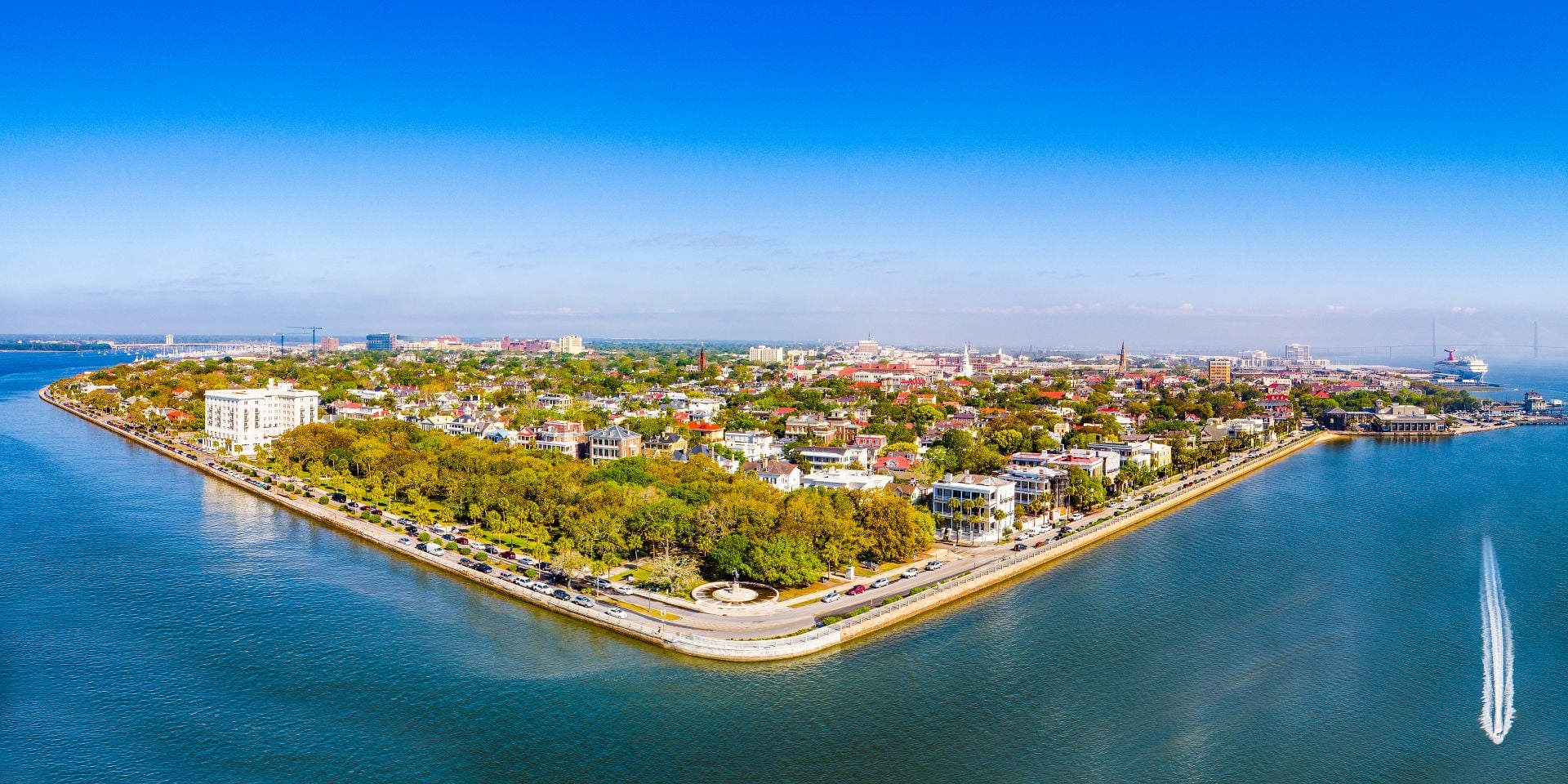
Downtown Charleston Homes for Sale and Community Guide
Last updated July 2026 by The TREAT Team. South Carolina License #96167.
Downtown Charleston homes for sale draw more national attention than anywhere else in the state, and almost nobody shopping the peninsula is buying the same thing. South of Broad and the Westside are both "downtown." They are not the same decision, the same price tier, or the same flood profile. The peninsula reads as one place in a postcard and lives as a dozen distinct neighborhoods on the ground.
The TREAT Team works the peninsula every week. Showings below Broad, listings off King Street, buyers weighing Harleston Village against Cannonborough-Elliotborough. We are not a suburban team that drives in for the occasional downtown deal. We are on it, and this guide is the version of the conversation we have with clients before they ever write an offer.
Why Downtown Charleston?
People buy the peninsula for reasons the suburbs cannot match, and it helps to be honest about which ones actually apply to you:
- You can live without a car for most of a normal week. Groceries, restaurants, work, the waterfront, and a college campus are often inside a walk or a short bike ride. Very little else in the tri-county offers that.
- The architecture is the product. Single houses, piazzas, and a historic fabric protected by one of the oldest preservation frameworks in the country. You are buying scarcity that cannot be rebuilt in a subdivision.
- Proximity to MUSC, the College of Charleston, and the legal and financial core. For people who work downtown, nothing beats a five-minute commute on foot.
- Culture and food at a level the rest of the region orbits. King Street, the Charleston City Market, Spoleto, and a restaurant scene that draws national press sit at your doorstep.
The trade-offs are just as real, and we put them on the table early. Flooding and insurance are a genuine line item here, not a footnote. Parking is a daily negotiation. Short-term rental rules on the peninsula are among the strictest in the region, so do not assume you can offset a mortgage with nightly rentals. Confirm a property's eligibility with the City of Charleston before you count on that income. And the price per square foot is the highest in the state. The peninsula rewards people who want exactly what it is, and frustrates people who expected suburban space at suburban costs.
What Makes the Peninsula the Peninsula
Charleston sits on a tongue of land between the Ashley and Cooper rivers, which is why locals say "the peninsula" as often as "downtown." The city was founded in 1670, moved to its current site in 1680, and spent its first century as a literal walled town. That history is not decoration. It shapes the street grid, the lot sizes, the elevation, and the rules you buy into.
The landmarks double as your mental map. The Battery and White Point Garden anchor the southern tip. Rainbow Row, the City Market, and Waterfront Park line the Cooper River side. King Street runs the spine of shopping and dining. Marion Square, the College of Charleston, and the green spaces near the Citadel pull the energy north. Colonial Lake and Hampton Park give the residential blocks their breathing room.
The biggest thing on the horizon is Union Pier. The State Ports Authority sold the roughly 65-acre former cruise and cargo terminal on the Cooper River to Beemok, the company owned by Ben Navarro, and the city has approved the financing framework to knit it back into the historic district. The plan is deliberately incremental, built block by block rather than from a single master plan, with public waterfront, parks, housing, and a College of Charleston business school in the mix. Read that as a long-term tailwind for the upper peninsula, not a reason to overpay today, because construction at scale is years out. The City of Charleston keeps the official project page updated here.
Downtown Charleston Homes for Sale by Neighborhood
The peninsula splits roughly into the lower end in the 29401 zip and the upper end in 29403. Here is how we route buyers through it.
South of Broad (29401)
The grand, historic core below Broad Street: single houses, walled gardens, harbor views, and the highest prices on the peninsula. Quiet, residential, and tightly preserved. This is for buyers who want the postcard and can carry it.
The French Quarter and the Historic Core (29401)
The blocks around the City Market, East Bay, and Rainbow Row. Galleries, restaurants, and some of the most recognizable streets in America. Walkable to a fault, with the trade-off that you live inside a tourism engine.
Harleston Village (29401)
Wrapped around Colonial Lake and the College of Charleston. A mix of historic homes, student energy, and some of the peninsula's best walk-to-everything blocks. Popular with people who want downtown without the South of Broad price ceiling.
Ansonborough (29401)
One of the earliest restored neighborhoods, between the market and the river. Handsome, central, and steady. It sits close to the Union Pier site, which makes it one to watch over the next decade.
Cannonborough-Elliotborough (29403)
The peninsula's most talked-about food-and-coffee pocket, full of renovated cottages and a younger, design-minded crowd. Walkable, full of character, and a frequent comparison point against Harleston Village for first-time downtown buyers.
Radcliffeborough (29403)
Quiet historic streets and handsome homes near upper King. A calmer neighbor to Cannonborough with the same architecture-forward appeal.
Hampton Park Terrace (29403)
An early planned residential neighborhood beside Hampton Park and the Citadel, known for bungalows and a strong block-by-block sense of community. More room and more yard than the lower peninsula, with a longer walk to the harbor.
Wagener Terrace (29403)
North of Hampton Park along the Ashley River side. Mid-century and historic homes, larger lots, and a neighborhood feel that draws families who still want a peninsula address.
North Central and the Westside (29403)
The upper, more transitional blocks of the peninsula. More variety in price and condition, ongoing investment, and the closest proximity to the Union Pier and upper-King redevelopment story. The honest read here changes street by street, which is exactly where local eyes earn their keep.
Schools and Getting Around
The peninsula is part of the Charleston County School District, with neighborhood schools including Memminger, James Simons, and Mitchell Elementary, plus the downtown magnet Buist Academy and Burke High School. Because peninsula zoning and the district's choice and magnet options shift from one block to the next, confirm the assignment for any specific address before you fall in love with it. Higher education shapes the rhythm too: the College of Charleston, MUSC, and the Citadel all sit on or beside the peninsula.
Getting around downtown is its own skill. Inside the peninsula, walking and biking beat driving most days, and the free DASH trolley and CARTA buses cover the core. Leaving the peninsula runs through a handful of arteries: the Ravenel Bridge on US 17 to Mount Pleasant, the James Island Connector to James Island and the beaches, US 17 west to West Ashley, and Meeting Street and I-26 north toward North Charleston and the airport. Parking, not distance, is the constraint most newcomers underestimate.
Buying or Selling in Downtown Charleston?
The peninsula is the one market in the region where a wrong assumption about flood zone, elevation, insurance, or short-term rental eligibility can cost real money, and where the right block at the right time still outperforms almost anything else in the Lowcountry. That gap between the postcard and the paperwork is the whole reason to have someone local in your corner. Do the flood homework with our guides to Charleston flood zones and homeowners insurance before you write anything.
If you are weighing downtown against the close-in alternatives, compare it with our West Ashley, James Island, and Mount Pleasant guides, or zoom out to the full Charleston County guide. When you are ready to talk specifics, find out what your home is worth, or see why buyers and sellers choose the best realtor in Charleston, SC. Call or text The TREAT Team at 843.738.2394.
Comparing Areas?
The whole city, mapped: which Charleston do you actually mean?
Over the Ravenel: the premium family market east of the Cooper.
Over the Connector: marsh, boat landings, and the Folly commute.
Across the Ashley: the city's most attainable in-city option.
Buyer Toolkit for Downtown Charleston
Start at the buyer hub, or go straight to the guide that fits your situation:
Cannonborough versus Harleston is a classic first downtown decision.
At peninsula prices, every line item is bigger. Know them all.
MUSC, the Citadel, and the base corridor all shop the peninsula.
The paths that still work, and where the caps run out downtown.
Lower credit, lower down payment, and what it costs.
SC Housing programs and where their price caps actually apply.
Scarce by design here; the product is historic. Know the difference.
Rare on the peninsula, which is exactly why the cottages that qualify move fast.
Downtown rents are the region's highest. Run your own numbers.
Seller Toolkit for Downtown Charleston
Start at the seller hub, then use the tools built for your decision:
A real valuation, not a Zestimate. Peninsula comps are their own craft.
The highest-stakes pricing decision in the region. Get the number right.
Deed stamps, attorney closing, and your real net.
A decision framework, not a headline.
Cash offers, coming-soon exposure, and the honest tradeoffs.
Trading the peninsula for space, or space for the peninsula. Map it out.
Moving, Insurance, and Flood
The relocation pillar: areas, timing, and how to land here without guessing.
What life actually costs in the tri-county, category by category.
On the peninsula the premium is part of the price. Know your number first.
Elevation and the letters decide your real monthly cost here. Read them first.
Work With Us in Downtown Charleston
An honest take on who actually fits your situation, including whether it is us.
The questions to ask before you sign with anyone, including us.
What past clients say it was like to buy and sell with TREAT.
Led by Brett Kelley, SC License #96167. On the peninsula every week.
The gap between the postcard and the paperwork is where downtown deals are won or lost. If you want the street-level read before you write anything, the conversation is free and there is no pitch attached to it.
Get My Free Market Report
📞 843.738.2394 | 📧 [email protected]
Sources: City of Charleston, Union Pier and U.S. Census Bureau QuickFacts, Charleston city (Vintage 2025) for citywide context. Live peninsula market figures appear in the Area Highlights on this page. Reviewed July 2026 by the TREAT Team at SCSOLD LLC. Reviewed by Brett Kelley, SC License #96167.
Free market report
Want the full market report for Downtown Charleston?
We want to ensure that you have all the information needed to make the best decisions when it comes to your home goals. When you enter your info in the form you will get instant access to the area's latest market report, complete with sales and demographic trends.
Downtown Charleston
Market Report
Frequently Asked Questions About Downtown Charleston
The peninsula breaks into the lower end in the 29401 zip and the upper end in 29403. On the lower peninsula you have South of Broad, the French Quarter and historic core, Harleston Village, and Ansonborough. On the upper peninsula you have Cannonborough-Elliotborough, Radcliffeborough, Hampton Park Terrace, Wagener Terrace, and the North Central and Westside blocks. Each has its own price tier, character, and flood profile, which is why "downtown" is never one decision.
For the right buyer, yes. You get genuine walkability, irreplaceable architecture, and proximity to MUSC, the College of Charleston, and the cultural core. The honest trade-offs are flooding and insurance costs, daily parking, some of the strictest short-term rental rules in the region, and the highest price per square foot in the state. People who want exactly what the peninsula is tend to love it. People expecting suburban space and cost tend to be frustrated.
Parts of it do, and flooding is the single most important thing to evaluate before you buy. Risk varies dramatically by elevation and flood zone, sometimes from one block to the next. The city is actively investing in protection, including the reconstructed Low Battery seawall and a long-horizon Army Corps perimeter seawall, but the big project is years from completion. Buy on the elevation and flood zone of the specific property in front of you, not on the promise of future infrastructure. Our guides to Charleston flood zones and homeowners insurance show you how to read both before you offer.
Probably not the way most buyers assume. Short-term rental rules on the Charleston peninsula are among the strictest in the region, and eligibility is tightly limited. Never count on nightly-rental income to make a downtown purchase work until you have confirmed that specific property's eligibility with the City of Charleston.
The peninsula is part of the Charleston County School District, with neighborhood schools such as Memminger, James Simons, and Mitchell Elementary, the downtown magnet Buist Academy, and Burke High School. Zoning and choice or magnet options shift block by block, so verify the assignment for any specific address before you make an offer.
Union Pier is the roughly 65-acre former port terminal on the Cooper River, bought by Beemok, the company owned by Ben Navarro, and slated to be redeveloped back into the historic district with public waterfront, parks, housing, and a College of Charleston business school. The approach is deliberately incremental and the financing framework is approved, but construction at scale is years out. Treat it as a long-term tailwind for the upper peninsula, not a near-term price driver. The City of Charleston keeps the official project page updated.
No. Downtown is the historic peninsula between the Ashley and Cooper rivers, a few square miles of a city that covers 114.8. The City of Charleston also includes West Ashley, parts of James Island, Johns Island, Daniel Island, and the Cainhoy peninsula, each a different market at a different price tier. This page covers the peninsula street by street; our City of Charleston guide maps the whole city if you are still deciding which Charleston you mean.
Two, and the split matters. The lower peninsula, including South of Broad, the French Quarter, Harleston Village, and Ansonborough, is 29401. The upper peninsula, including Cannonborough-Elliotborough, Radcliffeborough, Hampton Park Terrace, Wagener Terrace, and the Westside, is 29403. The two ZIPs behave as different markets, with different price tiers, buyer pools, and flood profiles, so filter your search accordingly.
The peninsula carries the highest price per square foot in South Carolina, and the range inside it is wide: South of Broad and the French Quarter set the ceiling, while the upper-peninsula blocks in 29403 offer the most accessible entries. A single average is misleading here because the neighborhoods behave as separate markets. The live Area Highlights and market report on this page carry the current figures, and we will pull the real comp set for any block you are considering.
Yes, and it is the most walkable place in South Carolina. Groceries, restaurants, offices, the waterfront, and two campuses sit within a walk or short bike ride of most peninsula addresses, and the free DASH trolley plus CARTA buses cover the core. The honest flip side is parking: living downtown without a plan for your car is a daily negotiation, and that constraint, not distance, is what most newcomers underestimate.
South Carolina assesses owner-occupied primary residences at a 4 percent ratio and second homes and investment properties at 6 percent, and primary residents are exempt from school operating taxes under Act 388. Nowhere in the state does that gap matter more than the peninsula, where second homes are common and prices are the state's highest: the same house can carry a dramatically different bill depending on how it is owned. Bills run through Charleston County, so confirm the millage and your ratio before you count on a number. Our South Carolina closing costs guide walks through the rest of the math.
The peninsula is the cultural engine of the region. The Battery and White Point Garden anchor the southern tip, Rainbow Row and the City Market line the Cooper side, and King Street runs the spine of shopping and dining. Spoleto Festival USA takes over the city every spring, Waterfront Park holds the harbor views, and Hampton Park and Colonial Lake give the residential blocks their green space. The restaurant scene draws national press year after year. It is all within a walk, which is the entire point of a peninsula address.
Ready to take
The next step?
Not sure if now's the right time to buy or sell? We would love to get to know more about you and your needs! Feel free to use any of the options here to get in contact with us!