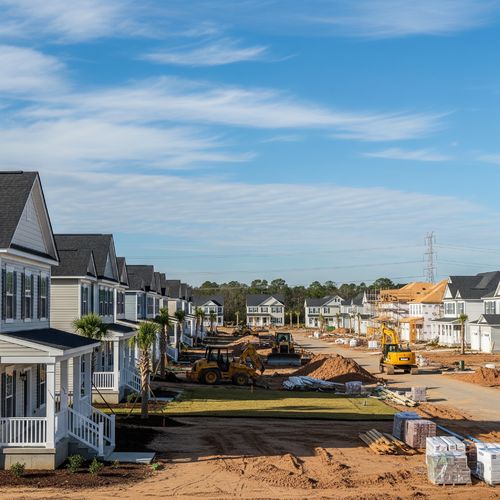

What Charleston SC Home Buyers Can Negotiate in 2026

How much can Charleston SC home buyers negotiate right now?
Buyers in the Charleston tri-county market have more room to negotiate than at any point in the last five years. Roughly 44% of early 2026 sales in the Charleston area included some form of seller concession, whether that's a closing cost credit, a repair credit, or a seller-paid rate buydown. With active inventory near 5,300 homes and average days on market up to 51 (from 47 a year ago), you can reasonably ask for help with closing costs, request repairs after inspection, or negotiate a temporary rate buydown instead of a straight price cut, especially on homes that have already sat 30 days or more.
By Brett Kelley | July 13, 2026
If you've been watching the headlines and wondering whether "buyer's market" actually means anything for your search in West Ashley or Summerville, here's the honest answer: it depends on the house, but the numbers back you up more than they have in years.
Why Charleston's Market Flipped in Buyers' Favor
The Charleston Trident median sat around $433,000 in April 2026, down 1.6% year over year. That alone tells part of the story. The rest is in the inventory and timing numbers.
- Active inventory is above 5,300 homes, a level the tri-county area hasn't seen in years.
- Days on market climbed to 51, up from 47 the year before, and some tracking shows the average stretching to 53 to 70 days depending on the neighborhood.
- Sale-to-list price ratio dropped to 97.09%, and only 8.7% of homes sold over asking price, down from 16.67% the year before.
- Price reductions jumped from 6.38% of listings to 20.66%, and more than 200 listings were withdrawn between late May and mid-June alone.
None of this means every seller is desperate. The market is dividing, not collapsing. Well-priced, well-prepared homes in Mount Pleasant and Daniel Island are still moving in under two weeks. Homes with deferred maintenance, or ones that were priced too aggressively out of the gate in West Ashley, Summerville, or Goose Creek, are the ones sitting long enough to build you real leverage. Knowing which kind of listing you're looking at is the first step to knowing what you can actually ask for. If you're weighing where to focus your search, it's worth comparing how these submarkets are behaving right now, since a "buyer's market" label in Mount Pleasant, West Ashley, James Island, and Johns Island doesn't mean the same thing in each one.
North Charleston and parts of Goose Creek are behaving similarly to West Ashley right now: more inventory, more price flexibility, and sellers who are used to fielding requests for concessions. Downtown and the barrier islands tend to hold firmer, since inventory there stays tighter even in a softening market.
What You Can Actually Ask For
Sellers who are feeling the pressure of a long listing period generally respond to three types of requests:
- Closing cost credits. The seller agrees to cover part of your closing costs, which lowers the cash you need at the table without changing your loan amount.
- Repair credits. Instead of asking the seller to fix everything your inspector flags, you ask for a dollar credit and handle the repairs yourself after closing.
- Seller-paid rate buydowns. The seller funds a temporary reduction in your interest rate, most commonly a 2-1 buydown, for the first year or two of your loan.
The buydown option is worth a closer look because it's the one most buyers overlook. With rates holding in the mid-6% range through spring 2026, a seller-funded 2-1 buydown on a $400,000 loan can drop your effective rate into the low 4% range for year one, saving you roughly $400 to $500 a month when your payment is highest relative to your income. That's often more real monthly relief than the same dollar amount taken off the purchase price.
Here's what that looks like in practice. Say you're under contract at $400,000 with a $9,000 seller concession on the table. You could ask for the full $9,000 as a price reduction, which trims your monthly payment by roughly $50 to $60 depending on your rate. Or you could direct that same $9,000 toward a 2-1 buydown, which drops your payment by $400 or more in year one and a smaller amount in year two, before settling into your permanent rate in year three. If you expect your income to grow over the next two years, or you're planning to refinance if rates drop further, the buydown often makes more sense than the price cut.
How much a seller can actually contribute depends on your loan type:
- FHA loans: up to 6% of the sale price or appraised value, whichever is lower.
- Conventional loans, under 10% down: up to 3% of the purchase price.
- Conventional loans, 10% to 24% down: up to 6%.
- Conventional loans, 25% or more down: up to 9%.
These caps apply to your total seller-paid costs, so if you're asking for both a closing cost credit and a buydown, your agent needs to run the math against your actual closing costs and your loan program before you write the offer. This is exactly the kind of number I run for every buyer before we submit, because asking for more than the cap allows can hold up your closing.
How to Ask Without Blowing Up the Deal
A vague request rarely works. A specific one, backed by evidence, usually does.
- Target the right listings. Homes on the market 30 days or more, especially with a prior price reduction, are where sellers are most open to concessions.
- Get pre-approved first. A seller takes a concession request seriously from a buyer with verified financing in hand. Without it, the ask carries a lot less weight.
- Support the number. Reference the inspection report, the home's days on market, or recent comparable sales rather than just asking for a round number.
- Put the buydown structure in writing. Specify whether you're asking for a 2-1 or 3-2-1 buydown directly in the offer. Most sellers and even some listing agents haven't dealt with one before, so your agent may need to walk theirs through how it works.
Every situation is different, and how much leverage you actually have depends on the specific house, the seller's timeline, and how your offer compares to anything else they're fielding. This is the conversation I have with buyers before we ever write an offer, because the goal isn't just a lower number on paper, it's the lowest real monthly cost you can lock in.
One more thing worth knowing before you start writing offers: since the 2024 NAR settlement, buyer's agent compensation is negotiated directly, not automatically built into the sale, and you'll sign a written agreement with your agent up front. In practice, most Charleston sellers are still offering to cover the buyer's agent commission, but you and your agent should confirm that on a home by home basis. It's one more line item to factor in alongside closing costs and any concessions you're requesting, and it's exactly the kind of detail I walk every buyer through before we tour the first house, not after we're already under contract.
Charleston's window of buyer leverage also isn't guaranteed to last. Some local market watchers expect competition to pick back up once anticipated rate cuts bring more buyers off the sidelines. If you're weighing whether to move now or wait, that's worth factoring into your timeline along with everything above.
Right now, buyers who understand what they can ask for are getting real savings on homes across Hanahan, North Charleston, Summerville, and beyond. If you're getting serious about buying here, get on the VIP Home Search so you see the right listings first, including the ones that have been sitting long enough to negotiate. Want to map out your specific offer strategy? Grab a time with me here: https://calendly.com/brett-treatrealty/discovery-call-with-brett.
About Brett Kelley
Brett Kelley is a licensed South Carolina REALTOR and the owner of The TREAT Team, serving buyers and sellers across the Charleston tri-county area of Charleston, Berkeley, and Dorchester counties. A REALTOR since 2016, he has helped hundreds of families buy and sell homes and specializes in listing and seller representation. Connect with Brett at findhomessc.com.
FAQs
A price reduction lowers the purchase price and your loan amount, which slightly reduces both your down payment and your monthly payment. A seller concession keeps the price the same but has the seller cover a specific cost, such as closing costs or a rate buydown, which can deliver more monthly savings than an equivalent price cut, especially when it's used to fund a temporary rate buydown.
It depends on your loan type. FHA loans allow up to 6% of the sale price, conventional loans allow 3% with less than 10% down, 6% with 10% to 24% down, and 9% with 25% or more down. These caps apply to your total seller-paid costs combined, so your lender needs to confirm the exact number before you submit your offer.
It depends on how long you plan to keep the loan and your loan-to-value ratio. A rate buydown delivers bigger monthly savings in the first year or two, which helps if you expect your income to grow or plan to refinance later. A price reduction lowers your loan amount permanently and can help you avoid PMI if it brings your down payment closer to 20%.
Yes, or your request will carry very little weight. Sellers take concession requests seriously when they come from a buyer with verified financing already in hand, since it shows the deal is likely to close.
West Ashley, Summerville, Goose Creek, and parts of North Charleston currently have more inventory and longer average time on market, which tends to translate into more willingness from sellers to offer concessions. Mount Pleasant, Daniel Island, and the barrier islands are holding firmer because inventory there stays tighter, so leverage varies a lot by specific listing rather than by county alone.